
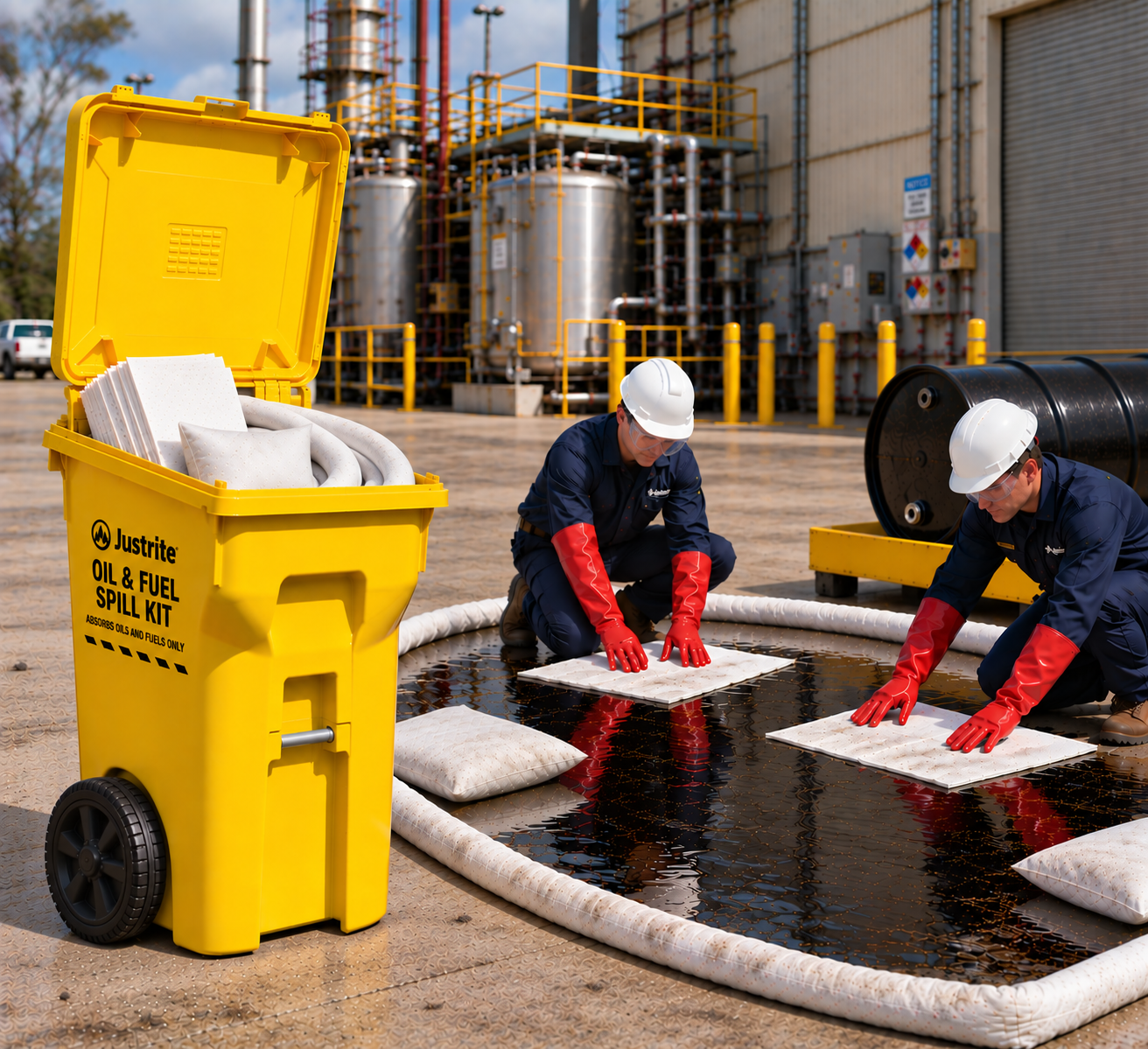
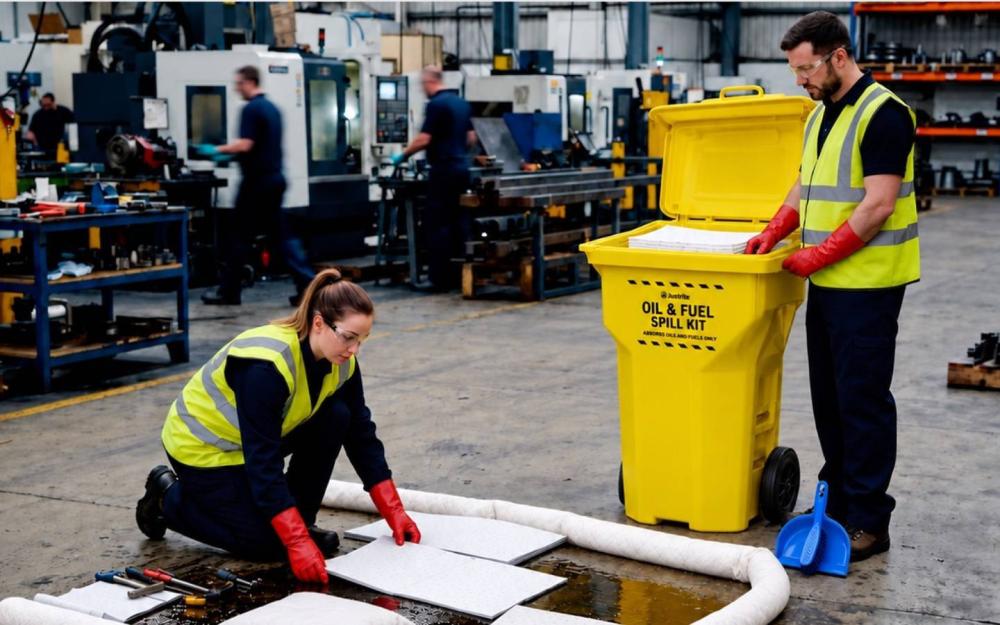
Loading...

Blog Spill response

What Is an Incidental Spill? Definition, Examples, and How to Respond

Justrite Safety Team Safety Content · Published

A hydraulic hose bursts during routine maintenance. A drum of lubricant tips over while being moved across the warehouse. Diesel leaks onto a generator pad after a fitting fails. Incidents like these happen every day in industrial facilities, but the immediate question is always the same: Is this an incidental spill that trained employees can safely manage, or has it become an emergency that requires specialized responders?

That distinction is more than an operational decision. The Occupational Safety and Health Administration (OSHA) uses specific criteria under its Hazardous Waste Operations and Emergency Response (HAZWOPER) standard to differentiate an incidental spill from an emergency release. The classification determines the level of training employees need, the procedures they must follow, and the regulatory requirements that apply during the response.

In this article, we’ll break down what incidental spills are, how they differ from emergency spills, and how to prepare for them in your facility.

Key takeaways

  • According to OSHA, an incidental spill is a hazardous substance release that does not present a significant safety or health hazard to employees in the immediate area and has no potential to become an emergency in a short period of time.
  • Spill classification depends on more than the amount released. Chemical properties, exposure risk, ventilation, location, and available personal protective equipment all influence the decision.
  • Employees who respond to incidental spills should receive Hazard Communication (HazCom) training under 29 CFR 1910.1200. HAZWOPER training is generally not required for incidental spill response.
  • Emergency spills require a formal emergency response, evacuation procedures, and responders trained under HAZWOPER.
  • Appropriate spill kits, absorbents, and containment equipment positioned near high-risk areas help facilities control incidental spills before they escalate.
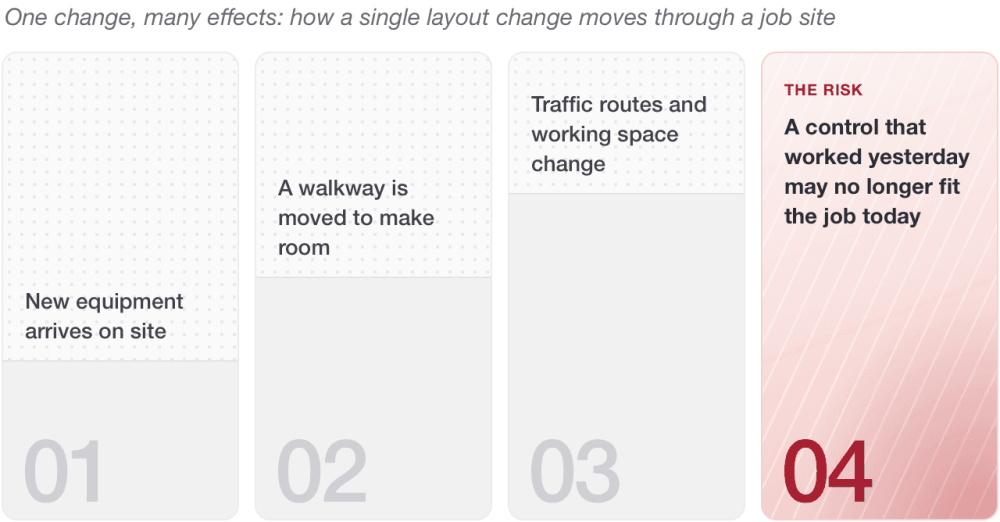
One Change Many EffectsOne Change Many Effects

The OSHA definition of an incidental spill

QUICK ANSWER

Under the HAZWOPER standard (29 CFR 1910.120), OSHA’s enforcement guidance describes an incidental spill as a release of a hazardous substance that does not pose a significant safety or health hazard to employees in the immediate area or to the employee cleaning it up, and that has no potential to become an emergency within a short period of time.

It must also be able to be cleaned using the PPE and spill response materials already available on site.

OSHA intentionally avoids defining incidental spills by volume alone. A few gallons of a highly toxic or volatile chemical could require an emergency response if it presents an immediate danger to workers. A much larger release of a lower hazard substance may still qualify as incidental if trained employees can safely contain it with the equipment and personal protective equipment (PPE) already available. The properties of the material, not just the amount released, determine the level of risk.

Each facility must evaluate spills within the context of its own operations. Safety Data Sheets (SDSs), ventilation, proximity to drains or waterways, available PPE, and employee training all influence the classification. Because of this, OSHA expects employers to establish clear criteria in their emergency response plans. A release that qualifies as an incidental spill at one facility may require an emergency response at another because the hazards and available resources are different.

Incidental spill vs. emergency spill: how to tell the difference

The difference between an incidental spill and an emergency spill is not always obvious in the moment. Facility personnel must evaluate the release based on the hazards it presents, the environment where it occurred, and the resources available to respond safely.

Factor Incidental spill Emergency spill
Substance Low-hazard material that trained employees can safely manage using available PPE. Highly toxic, corrosive, reactive, or otherwise hazardous material that presents an immediate danger.
Quantity Small enough to control with available spill response equipment and personnel. Large enough, or hazardous enough, that it exceeds the facility’s ability to respond safely.
Location Contained in an area where it can be isolated without threatening workers or the environment. Located near drains, waterways, confined spaces, or occupied areas where the release creates additional hazards.
Ventilation Adequate ventilation prevents hazardous vapor accumulation. Poor ventilation or vapor generation creates inhalation, fire, or explosion hazards.
Potential to escalate Stable conditions with no reasonable likelihood of becoming more dangerous. Conditions could quickly worsen because of chemical reactions, vapor buildup, fire, explosion, or continued release.

Substance

Incidental spill: Low-hazard material that trained employees can safely manage using available PPE.

Emergency spill: Highly toxic, corrosive, reactive, or otherwise hazardous material that presents an immediate danger.

Quantity

Incidental spill: Small enough to control with available spill response equipment and personnel.

Emergency spill: Large enough, or hazardous enough, that it exceeds the facility's ability to respond safely.

Location

Incidental spill: Contained in an area where it can be isolated without threatening workers or the environment.

Emergency spill: Located near drains, waterways, confined spaces, or occupied areas where the release creates additional hazards.

Ventilation

Incidental spill: Adequate ventilation prevents hazardous vapor accumulation.

Emergency spill: Poor ventilation or vapor generation creates inhalation, fire, or explosion hazards.

Potential to escalate

Incidental spill: Stable conditions with no reasonable likelihood of becoming more dangerous.

Emergency spill: Conditions could quickly worsen because of chemical reactions, vapor buildup, fire, explosion, or continued release.

Misclassifying a spill carries consequences. Treating an emergency release as incidental can expose employees to serious hazards and result in HAZWOPER compliance issues. Treating every minor release as an emergency can create unnecessary downtime, increase response costs, and indicate that spill response procedures are not clearly defined. Facilities should establish spill classification criteria before an incident occurs so employees can make informed decisions under pressure.

Examples of incidental spills in industrial settings

An incidental spill can take many forms, such as:

  • Hydraulic fluid leak in a maintenance bay: A hose on a scissor lift develops a slow leak, allowing a small amount of hydraulic fluid to collect on a sealed concrete floor. The area is well ventilated, no floor drains are nearby, and maintenance personnel have access to an oil-only spill kit and appropriate PPE. The release remains localized and can be safely contained before it spreads.
  • Lubricant drum tips during material handling: A drum of industrial lubricant is knocked over in a warehouse while being moved with a forklift. The product spills onto the warehouse floor but remains contained within the immediate work area. Employees use absorbent socks to prevent the material from spreading, apply absorbent pads to collect the liquid, and place the waste in approved disposal containers. No vapor hazards or environmental pathways are present.
  • Minor diesel leak during generator maintenance: A fitting drips diesel fuel while technicians perform routine maintenance on a standby generator. The leak is identified quickly, the source is secured, and absorbent materials capture the fuel before it leaves the generator pad. Workers follow established cleanup procedures using PPE recommended in the SDS.
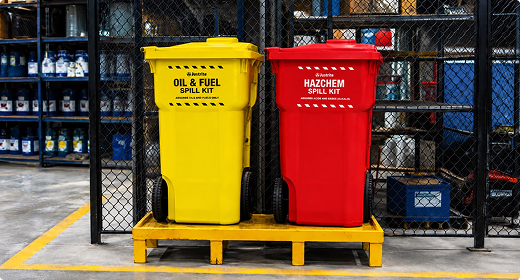
Spill kit help

Not sure which spill kit you need?

Tell us what you store and where spills happen, and a specialist will help you choose.

Conditions surrounding the release often matter more than the amount of material involved. Consider the same hydraulic fluid leak occurring inside a confined space with limited ventilation or near a storm drain that leads off-site. Even if the volume is identical, the increased exposure risk or environmental impact could require the incident to be treated as an emergency instead of an incidental spill.

How to respond to an incidental spill

Every facility should have written procedures that outline how to respond to an incidental spill based on the chemicals used, the work environment, and applicable regulatory requirements. The following steps provide a general framework, but they should complement, not replace, your site’s spill response plan.

Safety note

If there is any uncertainty about the nature of the release or the hazards involved, stop the response and treat the situation as an emergency.

1. Assess the spill

Determine the substance involved, review the SDS, and confirm that the release meets your facility’s criteria for an incidental spill. If the material cannot be identified or conditions appear unsafe, activate emergency response procedures.

2. Notify nearby employees

Alert workers in the immediate area so they can avoid the spill and any potential hazards. Restrict access to the affected area until the release has been contained and cleaned up.

3. Put on the appropriate PPE

Select gloves, eye protection, protective clothing, and any other PPE recommended in the SDS before beginning cleanup. Employees should never handle a spill without the protection appropriate for the material involved.

4. Stop the source if it is safe to do so

Close a valve, upright a container or isolate leaking equipment if the action can be completed without increasing the risk of exposure. Controlling the source helps prevent the spill from spreading and simplifies cleanup.

5. Contain and absorb the material

Use absorbent socks, pads, booms or other compatible spill response materials to keep the release contained. Cleanup should stop immediately if vapors increase, the spill spreads beyond containment, the material behaves unexpectedly, or anyone experiences symptoms of exposure.

6. Dispose of waste properly

Handle contaminated absorbents, PPE, and other cleanup materials according to local, state, and federal regulations, along with your facility’s waste management procedures.

7. Document the incident

Record the cause of the spill, the response actions taken, and any corrective measures needed to help prevent similar incidents in the future.

Preparation is a crucial aspect of incidental spill response. Spill kits should be located near areas where releases are most likely to occur so employees can respond without delay, and the absorbents in the kits should match the materials handled at the facility.

When a spill requires an emergency response

A spill that is correctly classified as incidental should not have the potential to become an emergency within a short period of time. In practice, however, responders sometimes discover that the initial assessment did not capture the full extent of the hazard. New information, changing conditions, or an unidentified material may reveal that the release requires an emergency response after all. At that point, employees should stop cleanup activities and follow the facility’s emergency response procedures.

If any of the following situations occur, a release should be reevaluated immediately:

  • Hazardous vapors or odors develop: Strong or increasing vapors may indicate the substance is more volatile than initially believed or that ventilation is insufficient to maintain a safe work environment.
  • The spill cannot be contained: A release that spreads beyond the available containment materials or continues to grow after response efforts begin may exceed the facility’s ability to manage it safely.
  • Unexpected chemical reactions occur: Heat, discoloration, smoke, bubbling, or other unexpected reactions suggest hazards that were not identified during the initial assessment.
  • Employees experience symptoms of exposure: Dizziness, respiratory irritation, headaches, skin burns, or other signs of chemical exposure should prompt an immediate stop to cleanup activities and activation of emergency procedures.
  • The material threatens the environment: Oil spills that reach waterways or shorelines, or leave a harmful sheen, may require federal reporting. Releases of hazardous substances at or above their reportable quantities may also require federal reporting. Spills that remain on-site may still need to be reported under state rules.
  • The substance cannot be identified: Employees should never attempt to clean up an unknown chemical release using standard spill response procedures.

Facility procedures should clearly state that employees have the authority to stop work whenever conditions differ from the original assessment or the hazards become uncertain. A conservative response helps protect workers and supports regulatory compliance when a release cannot be confidently managed as an incidental spill.

Spill planning, training, and compliance for incidental releases

An effective incidental spill response program starts long before a release occurs. Facilities should have written procedures that clearly distinguish incidental spills from emergency releases and define how employees should respond to each. Those procedures should reflect the chemicals used on site, the facility layout, available response equipment, and the hazards identified during risk assessments. Clear guidance helps employees make informed decisions during an incident instead of relying on assumptions or judgment alone.

Employee training is an important part of spill preparedness. Workers expected to respond to incidental spills should receive training under OSHA’s Hazard Communication (HazCom) standard, 29 CFR 1910.1200. This training should cover the hazards of the chemicals they may encounter, how to interpret a Safety Data Sheet (SDS), and how to select and use appropriate personal protective equipment (PPE), along with the facility’s spill response procedures. HAZWOPER training generally is not required for employees responding only to incidental spills, but Hazard Communication and applicable PPE requirements (29 CFR 1910.132 and 1910.134) still apply. Facilities should also ensure that HAZWOPER-trained personnel or outside responders are available if a release requires an emergency response.

Facilities subject to the EPA’s Spill Prevention, Control, and Countermeasure (SPCC) rule should ensure their spill response procedures align with their SPCC plan. SPCC requirements can apply to non-transportation facilities that store more than 1,320 gallons of oil in aboveground containers (counting only containers with a capacity of 55 gallons or more) and could reasonably be expected to discharge oil into navigable waters or onto adjoining shorelines.

Although an incidental spill may be contained quickly, a release that escapes containment can still trigger reporting. Oil that reaches navigable waters or adjoining shorelines, or a hazardous substance released at or above its reportable quantity, must be reported to federal authorities, and many states also require reporting of spills to soil. Applicability depends on each facility’s operations and storage capacity, so organizations should evaluate their obligations with a qualified environmental professional.

Spill response procedures should not remain static after they are written. Regular training exercises, equipment inspections, and reviews of actual spill incidents help identify opportunities for improvement.

Spill kits and containment equipment for incidental spill readiness

An incidental spill can only be managed safely if employees have immediate access to the right response equipment. A properly stocked spill kit provides the absorbents, PPE, and cleanup tools needed to contain and collect a release before it spreads. Kits should be selected based on the materials handled at the facility, the maximum spill volume employees are expected to address under the facility’s incidental spill procedures, and the hazards identified for those materials.

Location is just as important as kit contents. Spill kits should be positioned where releases are most likely to occur, including:

  • Fuel storage areas
  • Loading docks
  • Generator pads
  • Maintenance shops
  • Chemical storage locations

Employees should not have to leave the immediate area to search for response equipment during an active spill. Quick access to absorbents and containment materials helps limit the spread of a release and reduces the chance that it reaches drains, adjacent work areas, or environmentally sensitive locations.

Secondary containment provides another layer of protection by keeping spills confined to a designated area. Containment berms, spill pallets, drip pads and similar systems help prevent leaks from migrating beyond the source, making cleanup faster and reducing the likelihood of environmental contamination. Facilities that incorporate secondary containment into their spill prevention strategy are often better positioned to manage qualifying incidental spills safely and efficiently.

Different operations require different containment strategies. Fuel storage facilities often rely on fuel tank containment systems to capture leaks before they spread beyond the storage area. Standby generators benefit from generator containment systems and drip pads that collect minor fuel or oil leaks during operation and maintenance. Maintenance facilities that store drums and intermediate bulk containers (IBCs) can reduce spill risks with containment pallets that keep leaks isolated and simplify cleanup. Matching containment equipment to the specific hazards on site helps facilities strengthen spill preparedness and support regulatory compliance.

Make Sure Your Facility Is Ready Before the Next Spill

Safe spill response depends on preparation long before a release occurs. Facilities that invest in practical planning, appropriate containment equipment, and employee training are better equipped to protect workers, maintain compliance, and keep operations running when spills happen.

Start with what you store and where a leak is most likely, such as drum storage, fueling areas, generators and maintenance bays. Keep a spill kit matched to those liquids within reach of each area: oil-only kits for fuel and oil, universal kits for mixed fluids, and chemical kits for hazardous liquids. Not sure which kit fits your site? Get help choosing a spill kit.

Spill readiness

Get the right spill containment for your site

Tell us what you store and where spills are most likely. We’ll help you match spill kits and containment to the job.

Frequently asked questions about incidental spills

Does OSHA set a volume threshold that defines an incidental spill?

No, OSHA does not define an incidental spill using a specific volume threshold. The classification depends on the material’s hazards, the work environment, available PPE and response capabilities, and the spill’s potential to create an emergency.

Do employees need HAZWOPER training to clean up an incidental spill?

No, HAZWOPER training is generally not required for employees who respond only to incidental spills. However, workers should receive Hazard Communication (HazCom) training under 29 CFR 1910.1200 and understand the hazards, PPE requirements, and spill response procedures for the chemicals they handle.

When should a spill be treated as an emergency?

A spill should be treated as an emergency if it presents a significant safety or health hazard or has the potential to become one within a short period of time. Unknown substances, hazardous vapor releases, fire or explosion risks, uncontrolled spread, and environmental releases all warrant emergency response procedures.

Do incidental spills need to be reported to the EPA?

Not necessarily. An incidental spill contained entirely within the facility does not automatically trigger EPA reporting, but releases that reach soil, waterways, or stormwater systems, or exceed applicable reportable quantities, may require notification. Facilities should review their SPCC plan and applicable federal, state, and local reporting requirements.

What should a spill kit for incidental spill response contain?

A spill kit for incidental spills should include absorbents, PPE, and cleanup supplies appropriate for the materials handled at your facility. Oil-only absorbents are intended for petroleum products, universal absorbents work for many common industrial liquids, and hazmat absorbents are designed for more aggressive chemicals.

Free site assessment

Check your site’s spill readiness

A specialist reviews your spill risks, kit locations and containment, and flags what needs attention.

About the author

Justrite Safety Team

Safety Content

Justrite Safety Group's safety content team writes on compliance, storage and site controls across the Justrite, Eagle, Checkers and NoTrax brands.

Where to buy

Find a Justrite distributor near your site

Local distributors stock cabinets, cans and containment for fast delivery.

Enjoying this article?

Add Justrite as a preferred source and see our safety guides more often in Google.

Keep reading

Blog

8 changes that should trigger a construction change management review

Eight project changes that should prompt a fresh safety review on the job site.

Blog

What is a construction site safety plan?

The parts every site-specific safety plan needs, and how to keep it working in the field.

Blog

Ground Protection and Cable Management for Temporary Site Access

Matting, ramps and cable protectors for temporary routes — load ratings, trip-hazard compliance, and what changes when the route carries vehicles.