



Safety Cans and Containers
Safe and secure storage for flammable liquids
-
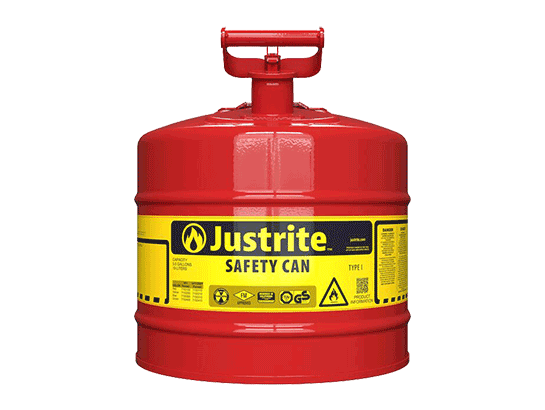
Type I Safety Cans
All Justrite Type I Safety Cans are constructed of powder-coated galvanized steel and feature self-closing, leakproof lids. Four color choices are available. Cans are certified by FM, UL/ULC and TUV and meet OSHA and NFPA requirements.
Shop now -
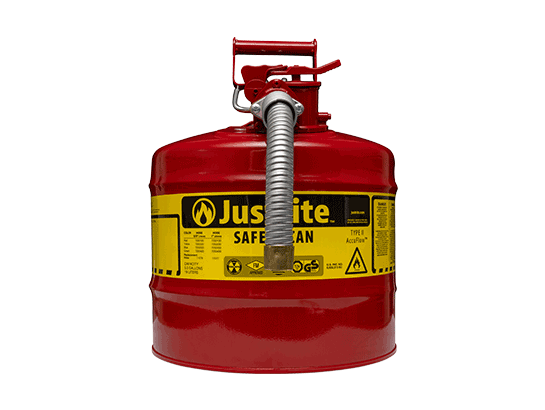
Type II Safety Cans
The Justrite Type II safety cans feature a vented design to provide smooth liquid flow, along with AccuFlow™ with Safe-Squeeze® trigger for safe and controlled pouring. Certified by FM, UL/ULC and TUV. Meet OSHA and NFPA requirements.
Shop now -

DOT Safety Cans
When traveling on the road, safely store and transport gas or diesel in DOT approved safety cans. Heavy-duty roll-bars protect spout from damage to prevent dangerous fuel spillage in the event of an accidental fall. Cans are FM-approved.
Shop now -

Waste Disposal Safety Containers
All Justrite waste disposal safety containers protect against the risks caused by flammable waste use in the workplace. Container options include biohazard waste cans, waste receptacles for combustible trash and cigarettes, and liquid disposal cans.
Shop now -

Oily Waste Cans
Justrite oily waste cans are designed to prevent the spread of fires caused by stray sparks or spontaneous combustion. A number of options are available to safely dispose of oily rags and cleaning cloths in the workplace.
Shop now -

Plastic Safety Cans
Our chemical-resistant Type I plastic safety cans offer safe storage for flammable corrosives. Its durable one-piece body construction stands up to tough acids and heat, ideal for lab environments. Red and white color options are available.
Shop now -

HPLC and Chemical Containers
Justrite's line of HPLC laboratory waste disposal containers feature quick-disconnect features and coalescing carbon filters to keep laboratory and personnel safe with a compliant, environmentally-friendly solution to waste collection.
Shop now -

Laboratory Carboys & Solvent Waste Systems
Use carboy and solvent waste systems and accessories for the collection of HPLC waste, or the storage, transfer, and disposal of chemicals. These lab waste disposal containers feature interchangeable caps and adapters, and ergonomic design.
Shop now -

Surface and Parts Cleaner
Justrite plunger cans moisten cleaning cloths by utilizing a smart-pump to bring more liquid to the top. Safety dispenser cans offer a safe, convenient way to release small amounts of liquid directly onto work surfaces or into lab beakers.
Shop now -

Outdoor Ashtray Stands
Justrite outdoor ashtrays enhance your business image with an outdoor ashtray stand and keep your property free of unsightly cigarette butts. The self-extinguishing design safely collects unsightly cigarette butts and reduces the risk of fire.
Shop now -

Parts & Accessories
To ensure the continued safety and functionality of its safety cans and containers, Justrite offers a variety of accessories. Our gas can parts inventory includes nozzle replacement hoses, spouts, funnels, flame arresters, gaskets and more.
Shop now
Featured Products
-
 5 Gallon, 1" Metal Hose, Steel Safety Can for Flammables, Type II, AccuFlow™, Red - 7250130Model No: 7250130$127.00
 -
 5 Gallon Steel Safety Can for Flammables, Type I, Funnel, Flame Arrester, Red - 7150110Model No: 7150110$74.00
 -
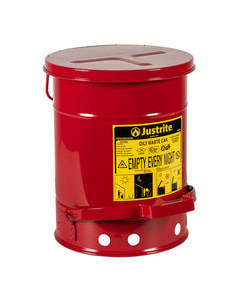
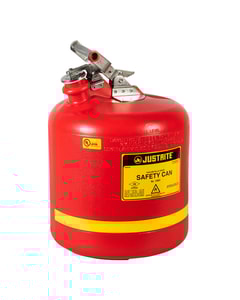

Justrite Safety Cans and Containers
One gallon of vaporized gasoline can explode with the same force as 20 sticks of dynamite. Safety containers protect workers by minimizing the risk of fires when handling hazardous liquids.
Offer safe storage for flammable liquids for workplace environments. With Justrite's safety cans, accidents and fire risks are minimized, protecting people and resulting in a safer workplace. Safety cans and containers by Justrite are designed with safety codes in mind to meet a variety of different safety regulations.Justrite safety gas cans and fuel containers meet NFPA and OSHA standards, most are FM Global approved and/or Underwriters Laboratories listed, and many models carry worldwide acceptance with TUV certification. They serve several critical functions:
- Contain hazardous liquids, controlling vapors to reduce the risk of fire and protect workers
- Comply with federal OSHA regulations, as well as state and local fire codes
- Make your job easier by improving efficiency - engineered with features that enhance pouring and filling operations
Note: Consumer plastic and metal gasoline cans are closed containers that do not have the same vents that an approved safety fuel can is required to contain.
Gas Can Color Codes
- Red: Gasoline
- Yellow: Diesel
- Blue: Kerosene
- Green: Oil
Yes, safety cans can be used outdoors, and many Justrite customers do. However, outdoor use requires specific precautions due to temperature changes, vapor pressure, and transport considerations.
When temperatures are hot, vapor pressure inside a safety can increases. Safety cans are designed with emergency pressure relief, typically rated at 3 to 5 psi, but it is still important to relieve pressure in the vapor space before dispensing to prevent sudden fluid release or splashback. Rapid temperature drops can also create a vacuum inside the can, which in rare cases may lead to implosion. To reduce this risk, keep cans shaded, avoid extreme temperature swings, and maintain fluid levels above half full when possible.
Safety cans should always be stored in well-ventilated areas, never in closed vehicles or passenger compartments, and secured to prevent movement during transport. When transporting fuel for job-related activities, follow U.S. DOT Material of Trade rules, which allow a maximum of eight gallons in safety cans. Learn additional tips and best practices for outdoor safety can use here. https://www.justrite.com/news/tips-for-using-justrite-safety-cans-outside/
Type I safety cans have a single opening that is used for both filling and dispensing. When filling Type I safety cans, using a funnel is recommended to help reduce spills.
Type II safety cans have separate openings, one for filling and a dedicated spout for dispensing, which allows for more controlled pouring. Justrite Type II safety cans typically include a flexible hose and controlled-pour features such as an AccuFlow manifold with a Safe-Squeeze trigger handle. Choosing a flammable safety can? Ask these questions first. https://www.justrite.com/news/5-questions-to-ask-when-choosing-safety-cans-for-flammables/