Aerosolv® Aerosol Can Disposal Recycling Systems

  • Aerosol Can Disposal System

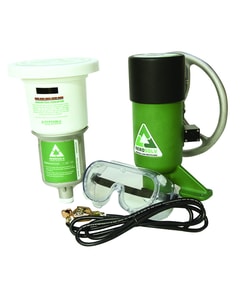
    Safely recycle with Aerosolv®, the original aerosol can puncture system designed for compliantly disposing and recycling spent aerosol cans. Choose from a variety of aerosol can disposal systems suitable for a number of industrial applications.

    Shop now
  • Propane Cylinder Recycling

    The Prosolv® recycling system is a safe and economical way to dispose of propane cylinders by effectively removing the sealing sleeve and internal valve stem from propane, propylene, mapp and calibration gas cylinders for safe disposal.

    Shop now
  • Parts & Accessories

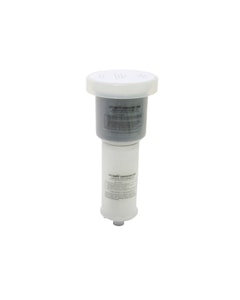
    Keep your Aerosolv® and Prosolv® recycling systems operating at peak performance with replacement Aerosolv filters, accessories and parts. Browse our extensive product line of genuine Aerosolv and Prosolv parts and accessories.

    Shop now

Featured Products

Loading...

Aerosolv Aerosol Recycling System

Every year, American industries consume a staggering 3,000,000,000 aerosol cans, resulting in 375,000 tons of steel, enough to produce 500,000 cars. Keep empty aerosol cans out of landfills with the Justrite Aerosolv® Aerosol Can Recycling System, a revolutionary solution that allows users to convert spent aerosols into recyclable steel containers with minimal maintenance required.

Our puncture device ensures safe and compliant disposal of aerosol cans, helping you meet RCRA-empty compliance regulations after use. With EPA certification, our units provide a secure method for the disposal of hazardous aerosol spray cans.

Aerosol and spray paint cans are widely used across major industries such as industrial manufacturing, municipalities, and vocational education. But what happens to these cans after they have served their purpose? Improper disposal of pressurized aerosol cans can lead to hazardous waste at landfills or facilities, posing risk of explosions due to propellants or liquid contents. Non-compliance with proper disposal guidelines can result in hefty fines for companies.

Using the Aerosolv Aerosol Can Recycler

By implementing an Aerosolv aerosol can puncture system, you can eliminate an entire RCRA waste stream and significantly reduce disposal costs. The angled pin ensures a clean puncture every time, while the two-piece coalescing filter and carbon cartridge effectively capture odors and potentially harmful VOCs.

Installation is quick and easy, with the unit conveniently mounting on either a 30- or 55-gallon drum using standard 2" and ¾" bungs. Our system is compatible with various sizes of aerosol cans, including domed mini, standard, and jumbo aerosol cans. For added safety, the aerosol can recycling systems include a ground wire to prevent static buildup.

Curious about how our Aerosolv aerosol can puncturing device can help you dispose of full aerosol cans or cans that are not empty? Watch our demonstration video for a step-by-step guide on proper aerosol can disposal.

Choose the Justrite Aerosolv Aerosol Recycling System for efficient, compliant, and environmentally-friendly aerosol can disposal.

Are all aerosols considered hazardous waste?
Yes, but not because of the primary product they contain. Spent aerosol cans would be considered empty, and therefore exempt from regulation, were it not for the fact that the propellant compressed gas is reactive to heat and is still present in an empty can (40 CFR 261.23 (a) (6)). Learn more about the rule here. https://www.govinfo.gov/content/pkg/CFR-2009-title40-vol25/pdf/CFR-2009-title40-vol25-sec261-1.pdf
Are there any aerosols that should not be co-mingled when collecting into the drum?
Yes, caustics (such as oven cleaners) and pesticides or insecticides should not be collected into a drum with other liquid residuals. They can, however be collected into segregated single-content drums designated "pesticides only," "insecticides only," or "caustics only." Also, white metals-typically labeled as "cold galvanized" should be separated and not co-mingled with any other aerosol residuals. Learn more about properly separating aerosol spray can waste. https://www.justrite.com/aerosol-can-waste-separation
Does a waste-profile sample need to be taken from each drum before transport by a waste handler?
In many cases, a separate waste-profile sample does not need to be taken from each individual drum. A single waste profile based on a worst-case scenario can often be used, provided it identifies all known aerosol residuals in the drum, excluding pesticides and insecticides. Reputable waste handlers typically accept this type of profile for co-mingled residuals, which can help avoid the added cost and time of profiling each drum. Justrite provides a sample aerosol waste profile that may be shared with your waste handler for review. Acceptance of any waste profile is determined by the waste handler. https://www.justrite.com/media/mageplaza/product_attachments/attachment_file/w/a/wasteprofileupdated_1.pdf
Does any compressed gas remain in the drum?
The compressed gas seeks escape through the point of least resistance, which is the filter. However, a minimal amount of gas may remain in the drum. To effectively maintain a prolonged seal, leave the last can punctured within the Aerosolv housing until the next time puncturing is resumed. Learn how to use the Aerosolv recycling system here. https://www.justrite.com/how-to-recycle-aerosol-cans
How is the Aerosolv unit operated?
The AEROSOLV unit threads directly to the 2" bung of a 55-gallon drum. The filter is installed on the 3/4" bung. Insert the aerosol can (inverted) into the AEROSOLV housing. Lower the sliding cap and lock into place. Then press the handle and immediately release. You will hear the contents being released into the drum. When puncturing partially full cans, best results are obtained by "pumping" the handle several times when puncturing, to moderate evacuation pressure. Learn how the Aerosolv recycling system works here. https://www.justrite.com/how-to-recycle-aerosol-cans
How long does it take to puncture cans with Aerosolv?
It only takes 15-20 seconds for the can to be depleted after puncturing. The Aerosolv system has the capability to puncture as many as 500 on a one-man eight hour shift. Learn how the Aerosolv recycling system works here. https://www.justrite.com/how-to-recycle-aerosol-cans
How many spent aerosols can be punctured into a 55-gallon drum?
Approximately 4,000 spent aerosol cans can typically be punctured into a 55-gallon drum, depending on can size and contents. The drum should not be filled beyond 75 percent of its capacity to allow proper displacement and safe containment of released contents. Learn more about the benefits of recycling aerosol cans. https://www.justrite.com/news/recycle-aerosol-cans-save-money/
How much can scrap steel recycling be increased with Aerosolv?
Generally, four aerosol cans equal one pound of steel. American industry consumes 3 billion aerosol cans per year, amounting to 375,000 tons of steel. Learn more about the benefits of recycling aerosol cans with Aerosolv. https://www.justrite.com/news/recycle-aerosol-cans-save-money/
How should the carbon filters be disposed?
Due to the variety of chemicals used in aerosol cans, some of which are hazardous, fully saturated carbon filters should be considered hazardous waste unless independently tested to the EPA's guidelines and proven non-hazardous. Please dispose of in accordance to local, state, and Federal laws and check with authorities having jurisdiction. Find out more about aerosol hazardous waste. https://www.justrite.com/aerosol-can-waste-separation
Is the puncturing of aerosol cans with Aerosolv considered treatment?
No; however, according to the EPA's Office of Solid Waste, a steel aerosol can that does not contain a significant amount of liquid (e.g., a can that has been punctured and drained) would meet the definition of scrap metal (40 CFR 261.1(c) (6)), and, if it is to be recycled, would be exempt from regulation under 40 CFR 261.6(a) (3) (iv). Scrap metal that is recycled is exempt from RCRA regulation under this provision even if it is hazardous waste, so generators need not make a hazardous waste determination. Read the complete rule here. https://www.govinfo.gov/content/pkg/CFR-2009-title40-vol25/pdf/CFR-2009-title40-vol25-sec261-1.pdf
What do you do with the drum of liquids once it has reached its recommended full capacity?
Simply call the waste handler who handles your other hazardous waste and manifest according to collected contents. Find out more about managing aerosol hazardous waste with Aerosolv. https://www.justrite.com/aerosol-can-waste-separation
What does it cost to dispose of the collected liquids in the drum?
A Hazardous Waste handler will charge from $275 to $350 per 55-gallon drum for proper transportation and recycling, reclamation and/or disposal. This represents the total disposal cost for the residual liquids of 4,200 spent aerosol cans. This compares to solid waste disposal cost for the residual liquids of 4,200 spent aerosol cans. This compares to solid waste disposal cost of unpunctured aerosol cans of $650 to $1,200 per 96 cans! On a direct comparison of 4,200 spent cans, the cost saving with AEROSOLV ranges form $28,000 to $52,000. Find out more about the benefits of Aerosolv cost savings. https://www.justrite.com/news/recycle-aerosol-cans-save-money/
What maintenance does the Aerosolv Puncturing Unit require?
To enhance the longevity of the unit, periodic maintenance should include the replacement of the gasket installed inside the unit that provides a seal against the can and the cleaning/lubricating of the puncture pin. Cleaning the unit where the liquids evacuate to the drum will decrease back-pressure. Replacement accessories are also availble from Justrite. https://www.justrite.com/aerosol-can-recycling/parts-accessories
Why do the materials listed on the waste profile add up to more than 100%?
Not every material listed on the waste profile will be present in the drum. However, the collected residuals in any combination will not exceed the percentages listed, which are the maximum percentages found in any industrial aerosol product (excluding pesticides, insecticides and caustics). View the waste profile here. https://www.justrite.com/media/mageplaza/product_attachments/attachment_file/w/a/wasteprofileupdated_1.pdf
Why is the anti-static wire necessary on Aerosolv and Prosolv systems?
In many cases, there is an OSHA requirement for grounding of vessels to prevent any build-up of static electricity transferred to a drum. The anti-static wire grounds the drum and the Aerosolv® unit simultaneously. The Aerosolv® system itself is not capable of generating a static charge. It is non-powered and utilizes a non-sparking puncture pin. Learn more about dangers of improper aerosol can disposal. https://www.justrite.com/understanding-aerosol-propellants
Will the Puncturing Unit accept any size aerosol can?
The system is designed to puncture any industry standard aerosol can, regardless of length. Special gaskets are available for smaller diameter cans. See all available gasket sizes for purchase. https://www.justrite.com/aerosol-can-recycling/parts-accessories/replacement-gaskets