Case Study: Chemical Storage Safety in Testing Labs
- By Justrite Safety Group
- Apr 28, 2026

This white paper breaks down the most frequent OSHA violations on construction sites—fall protection, hazard communication, ladders, scaffolding, and respiratory protection—and explains what drives citations.
It summarizes 2025 penalty categories (serious, willful, repeated, failure to abate) and outlines prevention tactics: written safety programs, regular inspections, ongoing training, documentation, and strict PPE/fall protection enforcement.
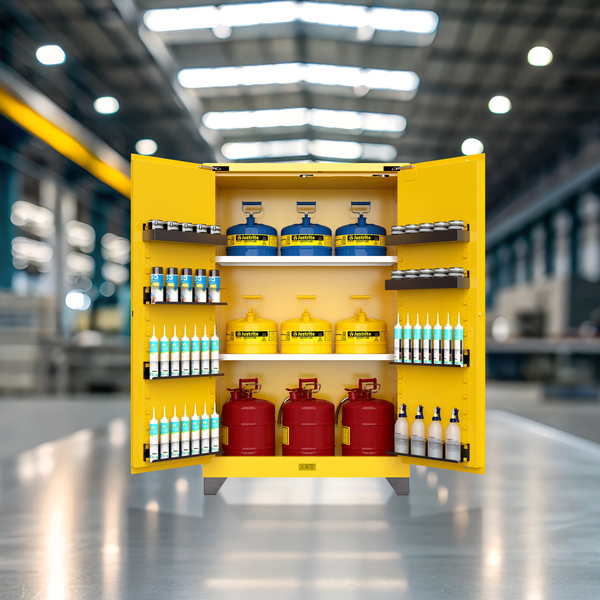
It also covers compliant storage of flammable liquids using approved safety cans and flammable safety cabinets aligned with OSHA and NFPA 30 requirements.
As lithium-ion batteries become more common across industries, understanding how to prevent fires and thermal runaway is critical. This white paper explains the science behind lithium-ion fires and outlines best practices for safe use and storage.
Topics include mechanical, thermal, and electrical causes of failure, the stages of battery malfunction, and preventive measures like temperature control, inspection, and proper containment.
Learn how the Justrite Lithium-Ion Battery Charging Safety Cabinet provides structural integrity, fire containment, and smoke diffusion to protect facilities from costly incidents.
Proper storage of flammable and hazardous liquids is essential for workplace safety and regulatory compliance. This white paper outlines how high-performance safety cabinets reduce risks, improve efficiency, and meet OSHA, NFPA, and IFC standards.
It details critical safety features such as self-closing doors, flame arresters, and double-walled steel construction, along with best practices for organization, inspection, and chemical compatibility.
Learn how the latest cabinet designs—like the Utili-Guard+™ Flammable Safety Cabinet—deliver greater storage capacity, durability, and compliance for safer, more productive workspaces.
Construction sites face growing environmental scrutiny, making spill containment vital for compliance and sustainability. This white paper explains how to integrate SPCC and SWPPP plans to manage oil storage, stormwater runoff, and pollutant control effectively.
It covers best practices such as dual-use containment equipment, site-specific risk assessments, and proactive inspection programs—plus innovations like IoT sensors, self-healing materials, and drone surveillance for real-time monitoring.
Learn how smart containment systems and predictive analytics can help your site anticipate risks, stay compliant, and protect the environment.
Self-closing flammable cabinets are essential for maintaining compliance and safety in workplaces that handle hazardous materials. They automatically shut and latch during a fire, minimizing the spread of flames and vapors.
OSHA and NFPA 30 regulations require cabinets to withstand at least ten minutes of direct flame exposure while preventing internal temperatures from exceeding 325°F. These cabinets also feature double-walled steel construction and three-point latches for maximum protection.
For safety managers and facility operators, investing in self-closing cabinets ensures regulatory compliance, reduces human error, and safeguards employees and property from fire-related risks.
Justrite, a global leader in industrial safety solutions, proudly announces the launch of the Utili-Guard+™ flammable safety cabinet. Designed for today’s fast-paced and demanding work environments, the Utili-Guard+ flammable safety cabinet redefines industry expectations by combining safety, exceptional organizational flexibility, and regulatory compliance in one innovative solution.